
History of Cuba
History of Cuba – Colonial Cuba to Independence
From Indians and slaves, buccaneers and Spanish grandees, pirates and indentured servants, has come a vibrant people. Explore their history and their struggles. From the oldest house in the Americas (quite a few others burned down) to the solid fortress at the harbour, and the living remembrance of the Peace Tree, Cuban history is told in stone and wood, and the faces of its people.
History of Cuba – Industrial Cuba
After the devastation of nearly 100 years of on-going turbulence, the sham of independence during the Republic years. King Sugar dominated the boom and bust economy. New towns, new railroads, new suburbs, economic growth was amazing. But underneath all was not well.
History of Cuba – Roots of Revolution
A century of turbulence and civil war has led to over five decades of relative calm. The struggle to become an independent nation in the face of US opposition is a poignant and triumphant story. Come with us to explore the Revolutionary War as played out around Santiago. Have history come alive and tangible.
History of Cuba – The battle for more than territory – II Frente
In just a short few months in 1958, Raul Castro fought and won not just the towns, villages and mountains of II Frente from the troops of Batista; but more importantly he showed the possibilities for life in the countryside after the Revolution, setting up many of the fundamental structures of the Government in waiting.
History of Cuba – Women of the Revolution
Vilma Espin and Celia Sanchez were two extraordinary women. United by the Revolution, their concern for people made them advocates of the fundamentals of the modern state. This tour takes you to their birthplaces and into their early lives. We take you to meet people they worked with as revolutionaries, and people who were inspired by their example. This is an 8 day tour in the provinces of Santiago de Cuba and Granma.
History of Coffee
The spread of Coffee from the Middle East through Europe and into the new world is a wonderful adventure. That toasting a green, vegetable tasting, bean changed the world is a story worth following. Coffee changed the life of Cuba’s mountains. Mountain sides were cleared, roads and houses were built, slaves brought in – all to export the most expensive legal drug in the world. Follow the colonial development of Cuba’s coffee industry.
Arts in Cuba
Art and Artists
Like most colonies Cuba, at first, followed the artistic fashions of Europe. Religious mural painting and secular commission work was the foundation of an artistic tradition from which has sprung a new artistic language. This tour begins with a short lecture and slide show which helps you understand that history and some of the best of today’s artists. Museum, gallery and studio tour.
This tour is a must for people interested in the arts and/or in purchasing Cuban work. The tours in Camaguey and Habana build on this information.
Art and Religion in Cuba
From the time of Columbus, Spanish Catholicism with it panoply of saints and many festivals was the principal religion of Cuba. Here and there were tiny pockets of Indians, still practicing their religions, but much of their culture had been swept away by the middle of the 16th century. The influx of African slaves building to major imports by the mid-19th century changed the face of Cuba and its religions. At first allowed to practice their own religions, their sheer numbers became seen as a threat especially during their festivals. Their religions were suppressed and Christianity imposed. However, the Yoruba transferred the attributes of their African gods to Christian saints and so found a way to stay within the law and practice their religion. This tour explores the importance of these mixtures as they inform art, music and dance in Cuba.
Arte Naif – Grupo Batay
This group of internationally acclaimed Arte Naif artists has their base in a small sugar town outside Santiago. The tour visits various artists in their home and their independent gallery. The day completes with a walk in this historic town which was built around a small central. The town has an interesting history having been started in the early 1900’s by a group of US Swedish immigrants from Minnesota. The early development failed in the face of huge foreign investment in King Sugar and on-going civil unrest, and the town was rebuilt as a modern American mill.
Art Classes are available by previous arrangement.
Architecture
Architecture Walk 1
The Historic Centre
One of Santiago’s leading architects takes you on a walk through history. Each city in Cuba has its own unique style and decoration. As one of the oldest of the cities, Santiago offers the most eclectic mix. Pirates, fire and earthquakes have enforced urban renewal – the Cathedral is the 3rd building on that site, and almost none of the very early buildings escape the attention of English and French pirates. Early colonial sits next to Art Deco, and buildings from the Republic and later periods. Learn to spot the fakes and the overbuilding and explore some of the glorious courtyards which can be glimpsed through half closed doors.
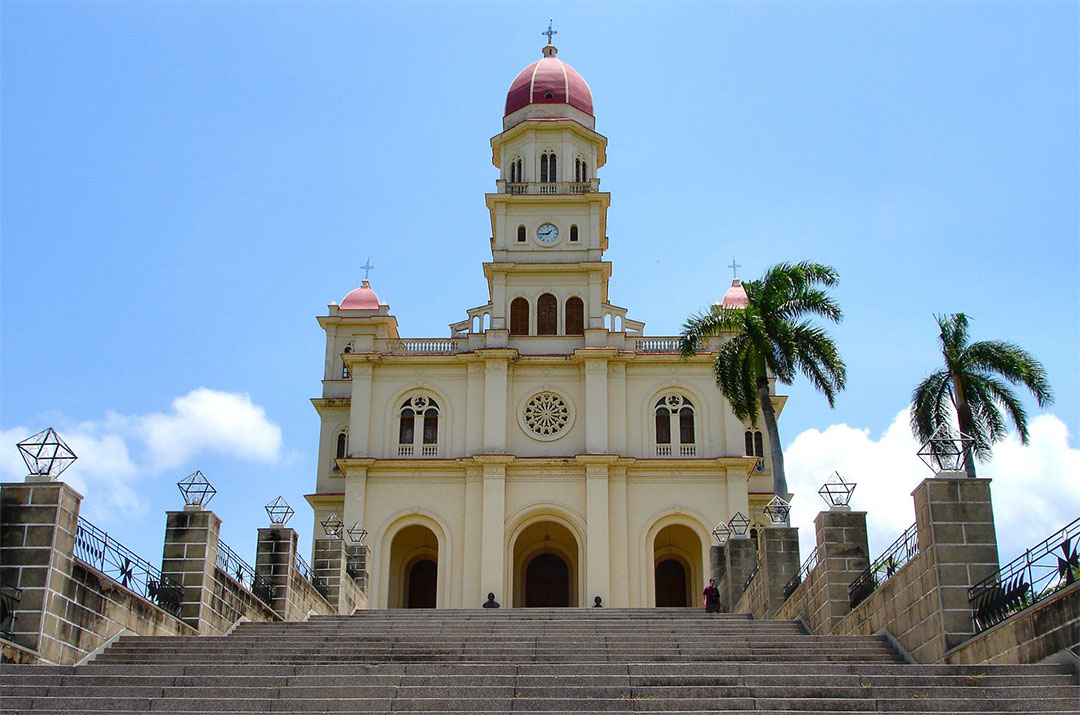
Architecture Walk 2 – The Republic Suburbs and Revolutionary Expansion
The coming of the automobile, the wealth brought by sugar, US prohibition, and US investment freed the owners of major businesses, senior US executives and the rich, from the need to live in the centre of the city, and gave them the money with which to fulfill their rural fantasies. Wide roads, houses set back in their own gardens, treed streets to preserve the quiet and coolness of early morning, and above all architecture expressing the new age – ferro-concrete allowing curves and balconies, elegance in design and durability. The new suburbs epitomized the new found confidence of the Age.
Independent Walking Tour 1 – Central Santiago
NEVER GET LOST MAP
This walking tour was designed for the independent tourist who likes to poke around, have a drink in an interesting bar, explore a museum, visit a gallery, all in their own time. Our – NEVER GET LOST MAP makes a great souvenir of your time exploring Santiago. Audio tour for 2022.
Culture
The Cuban Way of Death – New for 2021
For those of us who are used to leafy cemeteries with ancient and crumbling tombstones, visiting a major Cuban cemetery is an adventure in time and place.
This tour takes you on the path of death. When are you actually dead? What happens to you, and what are the rituals which take place. From coffin makers, to wreath makers, cemetery workers, and stone carvers, we follow the process. Visiting along the way ancient burials in the Cathedral, the mausoleum of Jose Marti, the huge boulder where Fidel’s ashes are encased.
We visit a family pantheon which holds the remains of generations, a simple wayside cemetery, and some remarkable sculptures.
And of course – we have some spooky tales to tell! And fun film to end your day. And what would a funeral be without a party! Or at least a good lunch!
Eco-Tours
Eco-Tour 1 – Gardens of clouds and forest
Join us in the enchanted world of ferns and clouds. We journey out of the city to a cloud forest with ancient fern trees and simple pines which existed in the time of the dinosaurs. Visit to a high altitude garden with beds of bird of paradise flowers and many exotic tropical plants. Visit a private garden hidden among the slopes and trees. Walk in the magical world of bromeliads and orchids, brightly colour butterflies and brilliant birds. Lunch at the beach
Eco-Tour 2 Fern and Orchid Garden
Visit to an internationally acclaimed fern and orchid garden with the most complete collection of tropical ferns in the Americas. The collection numbers some 3000 ferns and over 300 exotic and indigenous orchids. This is the life work of the Director of the Institute which he has created over the passed 50 years. Lunch in the garden. For aficionados and Garden Groups – Fern cultivation and propagation
Eco-Tour 3 – Gardens of desert, cacti and musical instruments
Join us for a tour in the arid hills of the south coast between the Sierras and the azul Caribbean sea. This coastal strip is full of micro climates permitting elephant grass here, and cacti there. We make lots of stops along the way to peer into gardens, tramp through the undergrowth (no sandals please) and look and point. The Cactus Garden represents a major collection of exotic and indigenous species and we spend time learning to propagate these heat and drought tolerant plants. Visit to private collection. Lunch in an Artisan Village For aficionados – Cactus cultivation and propagation
Eco Tour 4 – Wetland Birding
This fresh water lake and its tidal channels are a haven for endemic and visiting water birds. A morning along the channels and cannel will net avid birders lots of species for their checklist. For those who just enjoy a wonderful journey there are fresh water dolphins, rare crocodiles, and neon-brilliant crabs. Late afternoon birding along the coastal strip completes the day. Lunch in an Artisan Village.
Eco-Tour 5 – Birds, Butterflies and Bats
The road twists and turns giving spectacular views of the heavily forested slopes of the mountain side , and the blue of the coast below. You greet dawn on the top of the mountain. The best time to see both endemic and visiting birds is during the very early morning feeding. A hike up to the top of the huge rock which is all which is left of the vulcanic plug. Butterflies come out as the sun warms the forest, drinking at tiny mountain streams. The forest and garden of a 19th century cafetal fill with humming birds and butterflies. You end the day near the coast, where thousands of bats make their perfectly timed exodus from their coastal cave to the mountain side for fruit, nectar and pollen. Lunch at the beach.
Eco-Tour 6 – Coral and Fishes
Snorkel in the clear waters off Cuba’s South-east coast. The expert is part of the team which studies and cares for the Biosphere which was created 40 years ago, covering about 60 kms of fragile coast, mangrove swamps, and second and third growth forests. Species protection, habitat protection, research and propagation are key elements in this work. Breakfast at the beach. Turn this into a beach day with hike along the cliffs, or a lazy day sunk in the wonderful deck chairs, walking the beach or swimming in the blue-green waters.
Eco-Tour 7 – Geology of Eastern Cuba – the South Coast
The unique coastal formations, old volcanoes, desertification and erosion make this a fascinating coast to enjoy. To the west of Santiago fault lines, huricanitos (huge boulders thrown up by hurricane driven waves), uplifted and sheared rocks. To the east the continuing process of coastal uprising forming terraces, honeycombed limestone, and abrupt cliffs. Your guide has been collecting rocks since he was a child, mapping Cuba, and helping students understand a special environment. For all of us who took home pretty pebbles from the beach – this is a day out to remember.
Agriculture Tours
Agricultural tour 1 – Farms of the Sierras – III Frente
A delightful add-on to our agricultural tours, or just a couple of nights’ getaway into the beautiful mountains of Tercera Frente on the north facing slopes of the Sierras. These verdant hillsides produce coffee and fruits – avocados the size of coconuts, tiny bananas, cocoa. The eco-resort offers a natural swimming pool below a crystal clear waterfall, and great walks on the high plateau . Plate sized butterflies come to the stream to drink, hummingbirds sip the flowers, and the forest is alive with all manner of tiny creatures. Trail rides and birding walks can be arranged.
Agricultural tour 2 – Food for thought
The government of Cuba has a goal of the island becoming self sufficient in many foodstuffs. Since 1988 when the first organic gardens were created, increasing amounts of fruit and vegetables are being produced through intensive cultivation. Many of the gardens are in the centre of cities, near major residential developments, in schools, hospitals, police stations, army barracks, and in almost any other space, piece of ground or roof top. We visit local organic gardens, a market, and a small holding. Lunch at the farm
Agricultural tour 3 – National Reference Gardens
Our goal is two remarkable small gardens which seem to the overflowing with goodness.
The first garden, which is more like a small and expanding market garden, is termed a patio garden, but has little in common with your herb planters tucked between the deck chairs. It produces sufficient vegetables for several blocks of apartments, together with tilapia for the neighbours and rabbits for family meat. Inter planting and judicious use of flowers makes for good insect control, while the left overs from the sugar mills provide the material for earth worm beds and compost.
Our second visit is to a medicinal herb garden. This garden and its maker have been recognized for their excellence and their contribution to the field of urban agriculture and the health of the population. Every square inch of garden and now the roof and stairs is under cultivation. The garden is staffed by local volunteers, who take their pay in trips to various gardens and workshops.
Lunch in an artist’s studio with time to visit a nearby gallery or explore the little 20th century sugar town.
Agricultural tour 4 – Farm Day
Eager to get your hands into some tropical soil? Or just need to garden? Spend a day working on a small farm, preparing soil, planting, gathering crops, and helping the farmer extend his plantings, clean out his chickens and rabbits. Farm lunch.
Agricultural tour 5 – Mountain farm visits II Frente
Visits to 4 farms in the mountains of II Frente. Acknowledged for their outstanding production, teaching opportunities, and sound ecological practices, these farms show what can happen when consistent best practices, education and imagination blend together. Lunch in a century old farm house atop a small mountain!
Day adventure or overnight at a new eco-lodge with spring fed natural pools.
Active Tours
Active Tour 1. Sierra Maestras – Pico Torquino
To climb the highest peak in Cuba is the ambition of most Cubans. This hike takes you up the arid south face and into the clouds enshrouding the two peaks of Cuba and Torquino. The hike is done in easy stages, mule supported, and led by an naturalist who makes the trip frequently.
Active Tour 2. Sierra Maestras – Santo Domingo
This hike takes you from the south coast over Pico Torquino and through the rugged north slope covered in cloud forest and temperate woodlands. The higher rainfall makes for trees hung with orchids, birds and butterflies in abundance. The walk ends near the base the Revolutionaries worked from. A side trip by jeep can be made to the Comandancia.
The Sierra hikes are available from January to April depending on the weather. They cannot be done once the summer rains start.
Active Tour 3 – Ride Your Bike South Shore going West
This ride takes you out of the city just as dawn is coming. Past factories with names denoting heros of the Revolution and on into the countryside. You ride past small farms, gardens, schools until you reach the long hill! But once over that all the coast is laid before you. Azure sea, austere mountains, shady trees. Take a breather to see a sunken remnant of the Spanish fleet, stop at a little cemetery.
Active Tour 4 – Ride Your Bike – South Shore going East
A less challenging ride, along the coastal strip going east. This ride takes you through dry pastureland and into desert conditions. Swim at a little cove, visit a cactus garden, arranged lunch in artisan village. Early morning for you best start.
Active Tour 5- Ride Your Bike – Foothills
Take our map, or take a guide. The goal is the small summerhouse above the town of El Caney. This was where Fidel received the surrender of Batista’s general in Santiago. From there you can meander the back roads and come home a different way (Packed lunch) . For those returning the same way – lunch in a pocket sized farm.
Biennial International Choral Festival
Santiago de Cuba
Every two years, Santiago de Cuba hosts choirs from around the world, as they sing their hearts out, for the joy of the sound.
Choirs come from South, Central and North America, other Caribbean Islands, Britain, Italy, Spain, Germany, Norway, and other countries.
This is a non-competitive festival. Many of the choirs which come are amateur choirs, workers’ groups, and people who have come together for the experience of coming and singing in Cuba.
One of the highlights of the Festival is the finale of massed choirs.
While the festival venues are important, the choirs sing in the parks and squares of the city, visit schools, homes for children and older people, and where ever else they would like to sing. Some choir directors present workshops in their country’s music.
Cuba Beyond the Beaches invites you to join in this wonderful festival.
- We arrange your registration so that you have nothing to do but pick up your admission badges.
- We arrange hotel or homestay accommodations, transfers, transportation, meals, and practice space.
- We arrange tour programmes, beach picnics, cultural and eco-tours for accompanying friends and family, and for choristers before or after the festival.
- We are committed to your comfort.
Not in a choir, but would like to come to experience so much great music? We are pleased to offer comfortable homestays or hotel accommodations, meals, tickets to main events, transportation, and any of our tours.
Homestay accommodations are in licensed Cuban homes with private rooms with private baths, air conditioning . We book homestay accommodation with breakfast and dinner, hotel accommodation with breakfast. We specialize in vegetarian food, and food for people with diabetes or special diets.
Contact Us for more information concerning the Festival, accommodations, tours, etc.